

The Life of Chuck isn’t your typical Stephen King adaptation. There are no killer clowns, haunted hotels, or shadowy monsters lurking in the dark. Instead, Mike Flanagan turns inward, delivering an emotionally rich, time-bending meditation on memory, mortality, and the quiet grandeur of a life well lived. It’s less horror and more soulful sci-fi, with a dash of surrealism and a whole lot of heart.

Let’s examine the characters:
Chuck Krantz (Tom Hiddleston) is the gravitational center of the story—a seemingly average man whose life unfolds in reverse. From his final days in a crumbling world to his childhood moments filled with quiet wonder, Chuck’s story is deeply personal and cosmic all at once. Hiddleston is mesmerizing in the role, portraying Chuck with a vulnerability that feels both deeply human and oddly mythic. Chuck isn’t famous. He isn’t a hero. He’s just a man—an uncle, a co-worker, a kid who liked to dance—and that’s exactly what makes his life feel so profound.
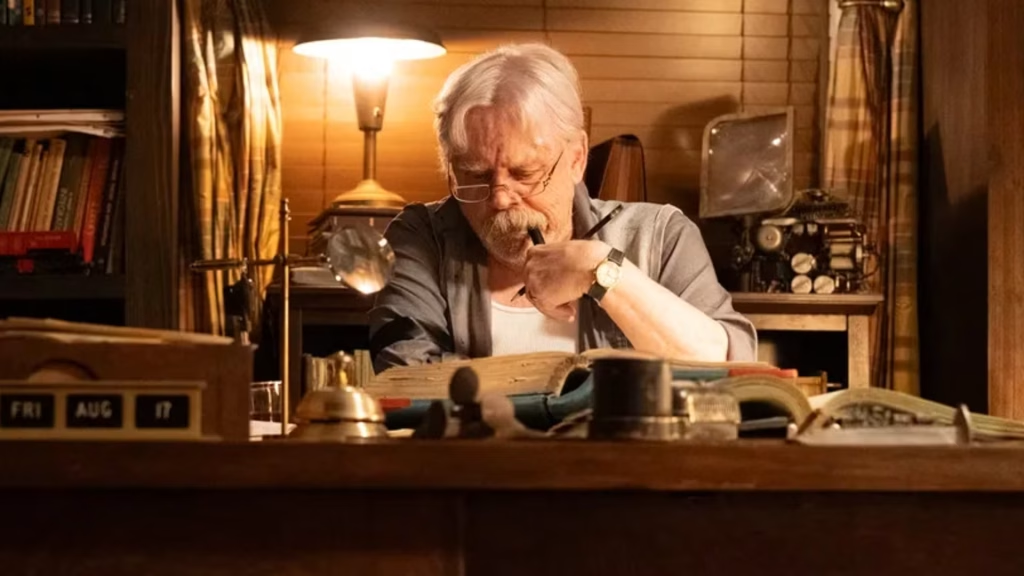
Marty (Mark Hamill), Chuck’s stern but loving grandfather, becomes a surprising emotional anchor in the second act. A no-nonsense man who teaches young Chuck the drums and unknowingly imparts a sense of rhythm and joy that ripples through the boy’s future. Hamill is warm and restrained, adding gravitas to the simpler chapters of Chuck’s life.
Alina (Karen Gillan), Chuck’s enigmatic co-worker at a data firm, is a curious blend of banter and existential dread. When the sky begins to shatter and the world heads for an abrupt end, her conversations with Chuck offer glimmers of connection, regret, and joy amidst collapse. Gillan grounds the film’s weirder moments in something deeply relatable: the ache to be remembered and the fear of being forgotten.
Young Chuck (Jacob Tremblay) is perhaps the most poignant version of the character—a bright-eyed boy dancing on an empty stage, unaware of how precious those fleeting moments are. His segments are among the most beautiful in the film, capturing the aching innocence that Flanagan handles with a light but devastating touch.

Flanagan, fresh off his horror hits like Doctor Sleep and Midnight Mass, flexes a different muscle here. He crafts a narrative that feels both intimate and cosmic, often within the same breath. As the universe begins to literally crumble—skies cracking, birds dropping mid-flight, dancers pirouetting into oblivion—we’re pulled into a story not about endings, but about how the small, beautiful moments of one man’s life matter, even as galaxies fade.
Visually, the film is a stunner. Dreamy transitions, moody color palettes, and quietly apocalyptic set pieces give the story a haunted glow. The score, delicate and nostalgic, feels like a lullaby for a dying world.
If you come in expecting a thrill ride or traditional horror, you might leave scratching your head. But for those willing to embrace its slow-burning strangeness, The Life of Chuck is a rare gift: a film that finds grace in grief, humor in heartbreak, and hope in the unlikeliest of farewells. The Life of Chuck is redeeming.


