
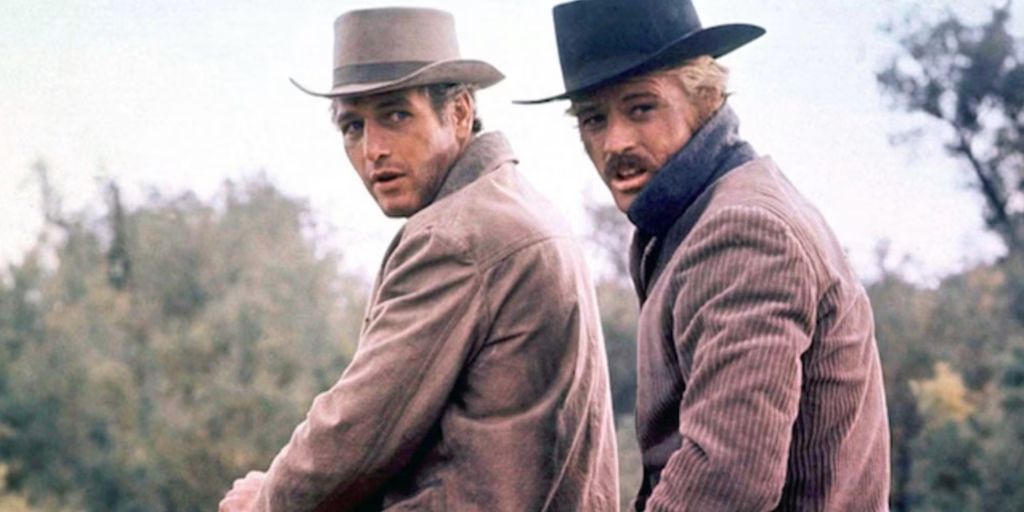
Butch Cassidy and the Sundance Kid remains one of the most cherished achievements in American cinema, due in no small part to the rare alignment of inspired direction and iconic performances. Released in 1969 and directed by George Roy Hill, the film arrived at a moment when Hollywood was rethinking genre storytelling, and Hill proved ideally suited to guide that transition. His direction blends classic Western imagery with a modern, character-driven sensibility, allowing humor, romance, and melancholy to coexist without undermining one another.
At the center of the film are two performances that have become inseparable from their actors’ legacies. Paul Newman, as Butch Cassidy, delivers one of the most charismatic turns of his career. Butch is a natural leader not because he is the fastest gun, but because he is clever, persuasive, and endlessly hopeful. Newman infuses the role with warmth and intelligence, masking the character’s growing unease as he realizes the world is changing faster than he can adapt. His charm is disarming, but never shallow.

Opposite him, Robert Redford plays the Sundance Kid with a studied restraint that perfectly complements Newman’s effervescence. Redford’s Sundance is defined by silence and precision, a man whose reputation precedes him and whose loyalty runs deeper than his words. Where Butch improvises, Sundance endures. The contrast between the two men forms the emotional foundation of the film and elevates it beyond a conventional outlaw story.
Hill’s steady, confident direction allows these performances to shine while maintaining tonal balance. The film moves easily from lighthearted banter to moments of quiet reflection, never signaling its shifts too heavily. This approach gives the story room to explore its deeper themes: the fading of the Old West, the rise of modern systems, and the uncomfortable reality of becoming obsolete in one’s own time.
The plot follows the pair as they rob banks and trains with style, only to find themselves relentlessly pursued by a new kind of law enforcement that cannot be outwitted. Their attempts to escape, both physically and psychologically, underscore the film’s central idea—that some eras cannot be outrun, only faced.
More than five decades later, Butch Cassidy and the Sundance Kid endures as a testament to the power of great casting and assured direction. Its legacy lives not just in its influence on later films, but in the timeless appeal of watching two perfectly matched actors bring humor, humanity, and grace to a story about the end of a legend.


