
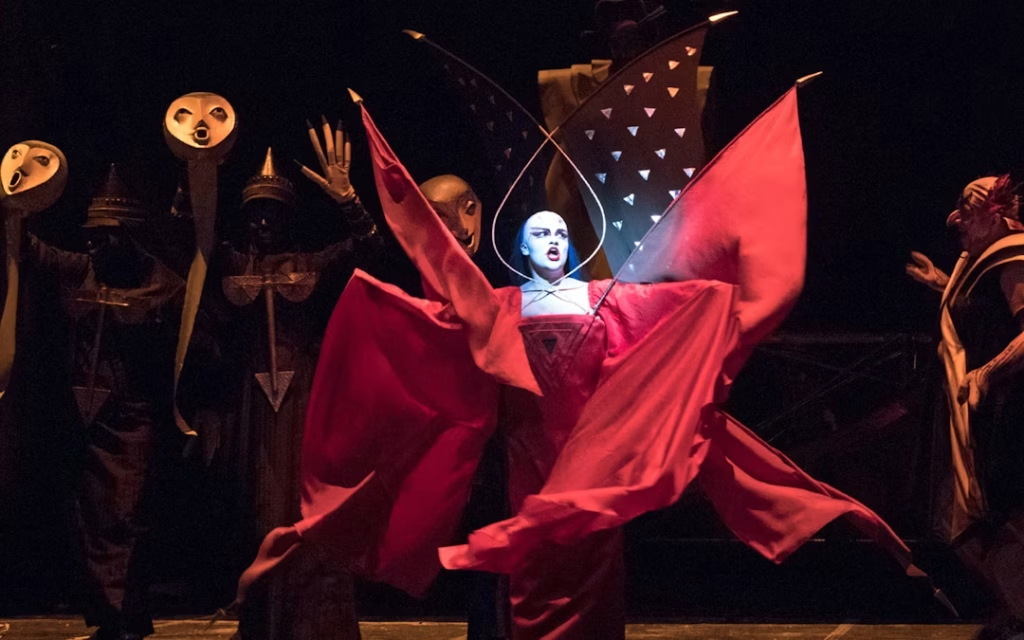
Opera’s The Queen of the Night from The Magic Flute is one of the most famous characters in opera. When the audience first meets her, she seems like a loving and worried mother. She asks the hero, Tamino, to rescue her daughter, Pamina, from a supposedly evil man named Sarastro. At first, she seems sympathetic and powerful, but as the story unfolds, it becomes clear that she is actually the villain. Sarastro is wise, calm, and good, while the Queen of the Night is driven by anger, revenge, and strong emotions. This shift in perception makes her a very interesting and dramatic character.
Even though she doesn’t appear for the entire opera, she has a huge impact on the story. She sets the main adventure in motion, tests both Tamino and Pamina, and represents night, chaos, and emotion, which contrasts with Sarastro’s calm, order, and reason. She is also very clever and manipulative, using fear and threats to try to control the people around her. In many ways, she embodies the idea of dangerous power, which makes her both fascinating and terrifying to watch.
The Queen of the Night is especially famous for her music. Mozart wrote her arias to be extremely challenging, with very high notes and fast, complicated runs. Her first aria, “O zittre nicht, mein lieber Sohn,” is her introduction. It begins slowly, almost tenderly, as she pleads with Tamino, but then explodes into dazzling high notes that show her authority and emotional intensity. Her second aria, “Der Hölle Rache kocht in meinem Herzen,” is one of the most famous arias in opera history. In it, she angrily orders Pamina to commit murder. The aria is full of fury, with high, piercing notes that sound like fire, showing her power and emotional extremes.
What makes the Queen of the Night truly unforgettable is her combination of drama and music. She is a character full of contradictions: a grieving mother, a furious villain, and a symbol of chaotic emotion. Even though she loses at the end, she dominates the audience’s memory with her extreme personality and incredible voice. Her role shows why opera’s are so thrilling—music and drama work together to create a character who is larger than life.


