

The wind shows up before the mountains do. It comes off the Southern Patagonian Ice Field with nothing to slow it down, flattens the tall grass across the steppe, and leans on the car door hard enough that you have to push back. Then the clouds pull apart for a minute and the towers appear, three gray granite spires standing over Torres del Paine National Park, close enough that you forget how cold your hands are.
This far corner of southern Chile takes real effort to reach. Once you are there, though, it knows how to take care of you, with wood fires, Chilean wine, and guides who read the sky every morning before they decide where you are going. A luxurious stay in Torres del Paine still ends most days with mud on your boots, and the best lodges would not have it any other way.
Getting there from North Texas is easier than it used to be. American Airlines flies a seasonal nonstop from DFW to Santiago during the southern summer, and from Santiago it is a domestic flight south to Puerto Natales or Punta Arenas. Natales is about two hours from the park by road. Punta Arenas adds roughly three more. The main season runs from about October into April, when the days are long and the lodges are fully staffed.

Where you sleep sets the tone for the whole trip, and the high end here is very good. Rates below are in U.S. dollars and move with the season and the exchange rate, so treat them as a starting point.
Explora Torres del Paine has what may be the best address in the park. The long white lodge sits on the shore of Lake Pehoé, right where the Salto Chico waterfall spills out of the lake, and the dining room looks across the water to the Cuernos del Paine. Everything is included, from meals and wine to more than 40 guided explorations on foot, on horseback, or by van. Groups never go above eight people. Three all-inclusive nights for two run around $9,240, and the rate covers park entrance fees and transfers from Puerto Natales.


Each evening, the guides sit down with guests at the bar and plan the next day together, based on how your legs feel, what you want to see, and what the forecast is doing. The spa is a short walk down a wooden path and has a heated indoor pool, a sauna, and four outdoor hot tubs above the Paine River. Explora also keeps its own stables, with horses bred and trained for this terrain.
Awasi Patagonia is quieter and more private. The Relais & Châteaux property has 14 villas on a private reserve bordering the national park, and each villa gets its own guide and 4×4. Nobody else sets your schedule. When the wind is too rough for the trail, your guide can steer the day toward wildlife instead, and when the sky clears at dawn, you can be out the door in minutes. Villas have wood-burning stoves and private hot tubs. This is the most expensive stay in the region, with recent published rates close to $3,500 a night for two, all-inclusive, including private transfers from Puerto Natales.

Plenty of people book Awasi for the pumas. Before sunrise, guests can head out with a guide and a team of trackers who follow prints and fresh signs across the reserve. It costs extra, and nobody can promise a sighting, but this part of Patagonia has become known as one of the better places in the Americas to see a wild puma. Awasi also works with researchers who monitor the cats with hidden cameras.
On the eastern edge of the park, Tierra Patagonia sits on a bluff above Lake Sarmiento. The long, low building is covered in wood and follows the slope so closely that you barely see it until you are almost there. Chilean architect Cazu Zegers led the design with Roberto Benavente and Rodrigo Ferrer, and all 40 rooms look out over the lake toward the Paine Massif. The hotel stands on land that belonged to Cerro Guido, one of the region’s original sheep ranches, and its all-inclusive packages cover meals, wine, and guided excursions. In 2026 the Michelin Guide awarded it three Keys, the guide’s top hotel honor. Four-night all-inclusive programs have started around $5,700 per person in high season.
The Singular Patagonia takes another approach to luxury. It sits in Puerto Bories, just north of Puerto Natales on the Última Esperanza Sound, which English speakers call Last Hope Sound. The hotel was built inside the Frigorífico Bories, a British-built cold storage plant that opened in 1915 and processed sheep from the surrounding ranches for export. Chile named it a National Monument in 1996. The old steam engines, furnaces, and even a small locomotive are still there, and guests reach the entrance on a vintage funicular. The park is about an hour and a half away, a fair trade for the history, the fjord views, and an easy ride into town for dinner. Room-only rates have started around $370 a night, and four-night all-inclusive programs have run about $4,600 per person in high season, making it the most flexible way to see Patagonia in real comfort.
A great trip here does not require a lodge rate, either.

EcoCamp Patagonia sits inside the park with the towers in view and opened in 2001 as the world’s first geodesic dome hotel. The design borrows from the dome shelters of the Kawésqar, the Indigenous people of this coast. Standard domes are simple, with two beds, warm quilts, a skylight for stargazing, and shared bathrooms, but no heat or electricity. Superior domes add heating and a private bath, and the suite domes come with a wood stove. Four-night packages with meals, guided excursions, and transfers have run from about $1,840 to $3,040 per person in high season, depending on the dome. There is no Wi-Fi or cell service. The camp runs roughly September to early May.
For hikers, the refugios are the classic budget option. These mountain lodges along the W Trek offer bunk beds in shared dorms, hot showers, a dining room, and meal plans that include dinner, breakfast, and a packed lunch for the trail. Most also have campsites, and several will rent you a tent that is already set up, along with a sleeping bag and pad, so you can hike without carrying camping gear. At Los Cuernos, a handful of private cabins share a hot tub, which is a nice splurge in the middle of the trek. The refugios are run by two companies, Vertice and Las Torres Patagonia, and the popular ones fill months ahead. That goes double for Refugio Chileno, the best base for a sunrise hike to the towers.
Cheaper is a relative word inside the park, though. For the 2026-27 season, a bunk in a shared room at Los Cuernos starts around $230 a person from November through March, and full board adds $140. At Paine Grande, a made bed with all three meals runs roughly $225 to $235 for foreign visitors. The real savings come from carrying your own tent and food and paying only for a campsite, which costs a small fraction of a refugio bed.

Puerto Natales has good rooms at friendlier prices too, and staying in town puts the restaurants within walking distance. Hostal Lili Patagónico’s is a family-run guesthouse with dorms and private doubles, down comforters, and a climbing wall. Dorm beds there have run around $24 a night and private rooms about $54, with breakfast included. Vinnhaus pairs a handful of well-designed rooms with one of the best breakfast spots in town, with rooms around $180 a night. From Natales, park buses and day tours leave every morning in season.
Puerto Natales is where the real eating happens. The town is small and windblown, and it eats far better than a place this remote should.
For the biggest night out, go to The Singular. The main dining room keeps the old plant’s iron and brick, adds fireplaces, and builds its menu around Patagonian game and seafood. Dishes like guanaco steak and king crab ceviche have appeared on the menu, and it is the most polished dinner in the region. The hotel lists main courses between 30,000 and 40,000 Chilean pesos, roughly $30 to $45, before wine. There is also El Asador, a second restaurant built inside the plant’s old blacksmith forge, where lamb and guanaco come off a wood fire. Book ahead for both and set up a taxi, since the hotel is a few miles outside the center of town.
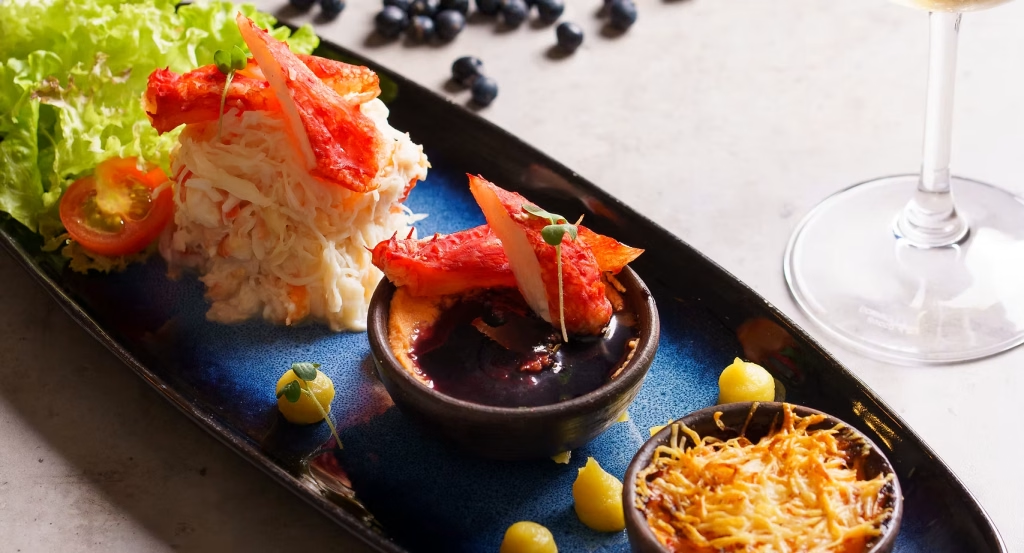
Afrigonia, at Magallanes 247, surprises first-timers. The kitchen brings African flavors to Patagonian ingredients, so local lamb, seafood, and king crab show up with masala curry, mango, and coconut cream. If the ceviche with lime and coconut milk is on the menu, order it first, and save room for a calafate sour. Afrigonia has historically closed in the middle of winter, so check before you plan a night around it. At Afrigonia or Santolla, plan on roughly $45 to $80 a person for a full dinner.

Santolla, at Magallanes 73, is built from recycled shipping containers and centered on the Magellanic king crab, which locals call centolla. The meat is sweeter and more delicate than the Alaskan crab most Texans know. Get the chupe de centolla, a rich baked crab dish with cheese, ideally after a cold day outside. The dining room is small, so plan ahead during the December to February rush, and check its Instagram before you go, since it has closed temporarily at times.
At the other end of the check, Mesita Grande, at Arturo Prat 196 on the corner of the plaza, has been feeding trekkers for years with wood-fired pizza and handmade pasta at long shared tables. On a busy night you will wait, and you will probably end up talking to hikers from three or four countries while you do.

Café Artimaña, at Carlos Bories 349, is the easy lunch, with big sandwiches, good soups, and plenty of choices for vegetarian and gluten-free diners. La Picada de Carlitos serves large, old-school Chilean plates that locals eat. Around midday, watch for chalkboards outside restaurants advertising the menú del día, a fixed-price lunch that is the best deal in Patagonia at about $15 to $22.
Stretching a food budget takes some planning, since Patagonia costs more than most of South America. Do what the trekkers do. Make the menú del día your big meal, split a pizza for dinner, and stock up at the Unimarc supermarket in Natales for trail lunches, since sandwiches and snacks inside the park cost far more than they do in town.
If your trip runs through Punta Arenas, stop at Kiosko Roca, at Presidente Julio Roca 875. The little counter dates to 1932 and serves an odd pairing that locals swear by: a choripán made with smooth chorizo paste and house mayonnaise on crisp bread, alongside a glass of leche con plátano, or banana milk. In 2012, Chileans voted it the best picada in the country in a national contest held by the government’s culture council. The company has announced plans for a Puerto Natales location.

Wine lovers should know that nobody grows grapes this far south. The Carménère and Cabernet on every table come from Chile’s central valleys, and the country’s southernmost experimental vineyards sit hundreds of miles north, near Chile Chico on Lake General Carrera. What Natales does have is beer. Baguales Brewpub, at Bories 430 facing the main plaza, has been brewing since 2006 and opened in 2010 as the first brewpub in Patagonia. It was started by a group of climbing friends, one of them an American, who came for the granite and stayed for the water. Ask for the Mate 101, a golden ale brewed with yerba mate, and order a burger big enough to split.
Adventurous eaters will find plenty to try.
Guanaco comes first. These long-necked relatives of the llama are all over the park, and there are enough of them that they are harvested under management to keep overgrazing in check. The meat is lean, closer to venison than beef, and around Natales and Punta Arenas you will find it as steak, as tartare, and in empanadas.
Cordero al palo is the dish of the region. A whole lamb is opened up, fixed to an iron cross, and leaned toward an open fire for hours until the skin crackles and the fat drips into the coals. El Asador Patagónico, at Arturo Prat 158 in Natales, is the traditional place to sit down for it.
Then there is the calafate, a small dark berry that grows wild across Patagonia and shows up in jams, ice cream, sauces, and the pisco-based calafate sour. According to local legend, anyone who eats one is bound to come back to Patagonia.

On the boats that cruise toward Grey Glacier, crews have made a habit of pulling a chunk of glacial ice from the lake and dropping it into a pisco sour. That ice formed high on the ice field long before any of us were born.
Most people come for the hiking, and Torres del Paine deserves its reputation as one of the world’s great trekking parks.
The hike to Mirador Base Las Torres tops almost every list. It runs about 20 to 22 kilometers round trip from the trailhead near the Welcome Center, with roughly 1,000 meters of climbing. The route follows the Ascencio Valley past Refugio Chileno, continues through lenga forest, and finishes with a steep scramble up a boulder moraine. At the top, a glacial lake sits at the base of the three towers, named Central, Monzino, and D’Agostini. Expect a long, hard day. Hikers who spend the night at Chileno have the best chance of catching the pink sunrise light on the granite.
The W Trek connects the park’s biggest sights over four or five days, from Grey Glacier through the French Valley to the base of the towers. The full O Circuit loops around the massif in a week or more and crosses John Gardner Pass, where the Southern Patagonian Ice Field opens up in front of you. The luxury lodges can build day hikes around the best sections of both, and have you back for a hot tub and a glass of Carménère before dinner.
Do some homework before you go. Park entry tickets have to be bought ahead of time through Pases Parques, the official system run by CONAF, Chile’s park service. The park changed its ticket structure in May 2026, so check the current rules for your dates. Overnight treks require confirmed refugio or campsite reservations, fires are banned everywhere in the park, and some trails close in the afternoon. If you stay at a lodge like Explora or Awasi, the staff handles most of this for you.
For something few places on earth offer, walk on Grey Glacier. Guided ice hikes leave from a base camp near Refugio Grey, where guides fit you with crampons, a helmet, and an ice axe before leading you out across blue ice, past crevasses and meltwater streams. Kayak trips from the same spot paddle among icebergs toward the glacier’s face. Both require at least one night at Refugio Grey or its campsite, so work them into a W itinerary.
Horseback riding is part of daily life here. Explora and Awasi both offer rides across the steppe and into the hills, on the same ground the baqueanos, the working cowboys of southern Chile, have ridden for generations.

About 24 kilometers northwest of Puerto Natales, the Cueva del Milodón makes an easy half-day trip. In 1895, a settler named Hermann Eberhard found a scrap of hide in the cave that belonged to the mylodon, a giant ground sloth that died out more than 10,000 years ago. The skin was so well preserved that people began to wonder if the animal was still alive. A piece of it later helped inspire Bruce Chatwin’s classic travel book, In Patagonia. Today a life-size replica of the sloth stands in the cave’s huge mouth.
Plan your dates carefully and you can see the region at its liveliest.

Every summer, the small town of Villa Cerro Castillo, about 60 kilometers from Puerto Natales on Ruta 9, hosts the Fiesta a la Chilena, a three-day country festival usually held in the last days of January or the first days of February. Admission is free. Ranch families come from all over the Magallanes region and across the border from Argentina’s Santa Cruz province. The main event is the jineteada, bronc riding on half-wild horses, and the opening night session runs under the lights well past dark. There is cattle sorting, folk music, cueca dancing and accordion-driven chamamé, craft stalls along the main street, and at midday, whole lambs roasting over open fires in the town plaza. For a visitor, it is the closest look you will get at Patagonian ranch life.
Each September, the Patagonian International Marathon brings runners from around the world to the park and the land around it. The race has been held every year since 2012 and offers several distances, so you do not need to run the full 42K to take part. Spring weather in Patagonia can be brutal, and for many of the runners, that is the draw.
Most people leave Torres del Paine with tired legs, a phone full of granite, and a feeling that they are not finished with the place. The calafate legend may have something to do with it.


