

There’s a ferry that runs out of Point Judith on the Rhode Island coast. Ride it an hour southeast on a clear morning, salt air coming off the bow, and you’ll arrive at a place that seems to have quietly opted out of the twenty-first century — not ungraciously, but meaningfully.
Block Island, officially the town of New Shoreham, sits twelve miles offshore in the Atlantic. It winters down to roughly a thousand souls and swells every summer into something considerably livelier. Shaped loosely like a pork chop, it runs about three miles wide and seven miles long, and nearly every inch of it earns your attention.


The Nature Conservancy named it one of the Last Great Places in the Western Hemisphere. More than forty percent of its land is protected open space — rolling meadows laced with old stone walls, freshwater ponds that draw an extraordinary variety of migratory birds, and dramatic coastal bluffs that plunge two hundred feet straight down to the Atlantic. Its seventeen miles of shoreline are entirely free and open to the public. You won’t find a private beach on Block Island. That alone says something about the place.
When to Go

Summer runs hot and social, with July temperatures in the upper seventies, packed ferries, and restaurants buzzing well into the evening. The light on the water in late July is something you won’t soon shake. Book everything early.
Shoulder season — late May and early September — is the locals’ quiet preference. The same bluffs, the same chowder, the same soft white sand, but with rates running up to forty percent lower and room to breathe. Wildflowers blanket the meadows in May. September still swims beautifully.
Fall belongs to the birders. Block Island is one of the East Coast’s premier migration stopover points, and October brings a low golden light and empty trails that have their own quiet magnificence.
Winter is for a certain kind of traveler. Most hotels and restaurants shutter after Columbus Day. The ferry still runs from Point Judith. The experience begins to resemble a private island.
Where to Sleep

The Block Island Bunk House handles the budget end honestly. Clean rooms, no pretense, walking distance to Ballard’s Beach and Old Harbor. This is the place for travelers who’d rather spend their money on lobster rolls than thread count.
The 1661 Resort is a family-owned property spanning several price points on the same rolling grounds. Budget rooms and ocean-view suites sit side by side, and on the property you’ll find the 1661 Farm and Gardens — a genuine oddity featuring camels, kangaroos, and a zedonk, which is exactly what it sounds like. Warm, well-run, and good for families without being exclusively aimed at them.
Champlin’s Marina & Resort is the natural choice for those arriving by sailboat or wanting resort amenities without the luxury price tag. A swimming pool, a fitness center, an on-site marina, free bikes for guests, and water views that make the Great Salt Pond at dusk feel like something out of a painting.

The Atlantic Inn is in a category of its own. Perched at the highest point in Old Harbor, it presides over six acres of manicured lawns and tended gardens with sweeping views of the ocean and town below. The twenty-three rooms and suites are newly renovated, blending Victorian architecture with genuine modern luxury — fine linens, en suite baths, and the kind of quiet that feels intentional. Its restaurant holds a Wine Spectator Award of Excellence. If you’re celebrating anything at all, this is the address.
Where to Eat

Start every morning at Payne’s Killer Donuts. It’s a food truck. It doesn’t matter. Warm, hand-made doughnuts — sugar or cinnamon, get both — crisp on the outside and impossibly tender within. A generational island tradition. They sell out. Go early.
Ellen’s at the Airport is a sage-green diner named for the owner’s grandmother and one of the only year-round kitchens on the island. Egg sandwiches and omelettes in the morning, patty melts and chicken pot pie for lunch. Nothing flashy, everything honest. In the off-season, Ellen’s may be your only option — and you’ll be entirely content with that.


Dick’s Fish & Provisions is where the day’s catch goes straight from the water to your hands. Sushi rolls made from the morning’s fish, poke bowls bright with local produce, a bluefish dip that belongs on a picnic blanket above the bluffs, and Thai iced tea brewed in-house. Live lobsters in the tank. A cooler stocked with local eggs and beef from Sprague Farm. It’s a fish market, a kitchen, and a reason to wander down to New Harbor on any given afternoon.
Ballard’s Beach Resort is Block Island’s great seaside party — tiki bars strung along the ocean, three live music stages, VIP cabanas, and dining where the sand comes right up to your chair. The food is solid New England: chowder, lobster rolls, fried clams done the right way. But the real draw is the atmosphere, which on a sunny Saturday afternoon sits somewhere between a classic New England clambake and a Caribbean beach bar, cheerfully and unapologetically.


For a proper dinner, The Atlantic Inn Restaurant is the finest kitchen on the island. Chef Francis Cavanagh opens with oysters three ways — Thermidor, Japanese miso, and grilled with Parmesan — before moving to sea scallops over lemon risotto and grilled sticky Thai shrimp. The garden setting, with its wandering rabbits and steady ocean breeze, is the kind of scene travel writers have been reaching for adjectives to describe for decades. Reserve well in advance.
The Barn at Spring House Hotel is the island’s most intimate dining experience, and its best-kept secret. An open kitchen anchored by a wood-fired grill, counter seating at a chef’s bar, the smell of smoke and good food meeting you at the door. Adults and children twelve and over only. Reservations are mandatory. The cancellation policy is firm. All of this is entirely warranted.
Don’t leave without stopping at Aldo’s Bakery — a family institution since 1977 offering housemade gelato, fresh pastries, and a boat-to-boat delivery service that may be the single most Block Island thing that exists. And TigerFish keeps the kitchen firing until midnight with Asian fusion bites, making it the natural last stop when the evening refuses to end.
What to Do

Mohegan Bluffs are the island’s crown jewel — two hundred feet of dramatic cliff face dropping straight to the Atlantic, with a wooden staircase winding down to a secluded crescent of beach below. The views stretch endlessly east. Arrive early and stay for the sunset.
Rent a moped from any outfitter near the ferry landing and spend a morning covering the island’s seventeen miles of roads. You’ll wind through meadows thick with wildflowers, past stone walls that have been standing since the 1600s, by both lighthouses, and along ridgelines with ocean visible on three sides. The hills are real. The moped earns its rental fee.
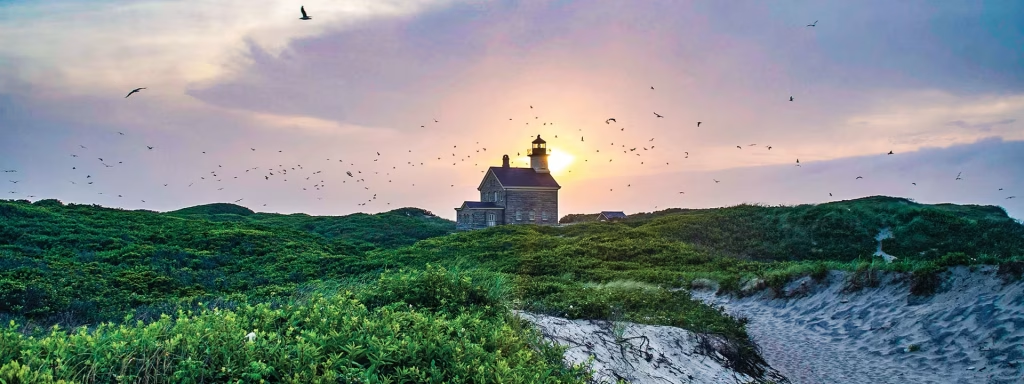

The Southeast Lighthouse has guided mariners since 1875 from its perch above the Mohegan Bluffs. In 1993, the entire structure was moved back from the eroding cliff edge — a feat of engineering locals are still proud of. The views of the offshore wind farm from here are the best on the island.
The Clayhead Trail and the Maze are the island’s finest hiking. Coastal paths trace the bluffs north, opening onto long ocean views, before dropping into a network of narrow footpaths through the preserve that locals call the Maze. You can spend an entire afternoon in there, pleasantly disoriented, and emerge having seen a version of Block Island most day-trippers never find.
Salt Pond Boat Tours will take you out on the Great Salt Pond for fishing, clamming, or simply drifting with a captain who knows these waters. Book ahead in summer.
The Block Island Ghost Tour is consistently one of the island’s highest-rated evenings out. A guide with a gift for storytelling leads groups through the island’s paranormal history on warm summer nights. It works for ages five to eighty-two — reviewers have tested the full range.


The Farmer’s Market runs June through October with around fifty vendors selling local produce, baked goods, honey, and handmade goods. It’s also one of the better ways to meet the people who actually live here year-round, long after the last ferry of the season has gone.
Block Island asks something that most destinations have stopped asking: that you slow down enough to actually be somewhere. There are no chain restaurants here, no big-box stores, no private beaches, no highways. What there is instead is a ferry schedule that sets the rhythm of your day, a bag of warm doughnuts in your hand before nine in the morning, bluffs that drop into the sea at the edge of everything, and seventeen miles of coastline that belong, equally, to everyone.
That’s not a bad trade.


