

San Juan is the most underrated city in the American travel universe. It is an hour and a half from Miami by air, requires no passport, runs on US dollars, and delivers a food scene that Michelin recognized in 2023 as the only one in the Caribbean worth the guide’s attention. The cobblestone streets of Old San Juan date to the 16th century. The beach at Condado is a ten-minute walk from a tasting menu worth flying across the country for. Thursday nights at La Placita de Santurce are the best outdoor bar experience in the Caribbean. Most Americans still think of it as a cruise ship stop. They are wrong, and the people who have figured that out would like to keep it that way.
WHERE TO STAY
Before choosing a hotel, choose a neighborhood. Old San Juan is beautiful and historic and worth exploring for an entire day, but staying there means cobblestones, no beach, and a short Uber to reach anything outside the old city walls. Condado is the right base for most visitors — on the water, walking distance from the best food on the island, five minutes from Old San Juan by car. Ocean Park, just east of Condado, is the local beach neighborhood — quieter, more residential, the place where people who actually live in San Juan go to the beach.


If money is no object, book Hotel El Convento at 100 Cristo Street in Old San Juan and understand that the trade-off of no beach is worth it for the atmosphere. A 17th-century Carmelite convent converted to a hotel in 1962, the pale yellow exterior and spinning ceiling fans and timber ceilings have been maintained through every renovation with the intelligence not to modernize the building out of its own history. The complimentary evening wine and cheese hour on the terrace is the best $0 activity in the city. Ask for a room on the upper floors with the courtyard view. Rates from $220.
The Condado Vanderbilt at 1055 Ashford Avenue — built in 1919, on the water, the kind of hotel that earns the word landmark — is the other splurge option, with three restaurants, four bars, and direct beach access. Rates from $350.

In the middle range, La Concha Resort at 1077 Ashford Avenue has direct beach access, multiple pools, and the Perla restaurant inside a glass bubble overlooking the ocean. Rates from $250. In Ocean Park, O:LV Fifty Five at 55 Calle McLeary is a 32-room boutique hotel with a rooftop pool and good design — and walking distance from Kasalta, which in this neighborhood counts as a primary amenity. Rates from $175.
For budget travelers, At Wind Chimes Boutique Hotel at 1750 McLeary Avenue in Ocean Park has a pool, free WiFi, and beach access from $109. In Condado, Canario Boutique Hotel runs from $90 and puts you close to everything worth eating. Tuesday is reliably the cheapest night in San Juan hotels — midweek arrivals save real money.
WHAT TO EAT

The single most important thing to know about eating in San Juan is that the best meals are often the cheapest ones. Start with the island’s building blocks before you do anything else — mofongo (fried green plantains mashed with garlic and pork crackling), tostones (twice-fried plantain slices, crispy and hot), alcapurrias (masa fritters stuffed with crab or braised pork, fried to order from a street cart), arroz con gandules (rice with pigeon peas, the rice that goes with everything), and lechón (whole roast pig, which you will eat standing up at a roadside stall and not regret). These are not tourist food. They are what people here eat every day, and no visit makes sense without them.


For serious dining, 1919 Restaurant at the Condado Vanderbilt is Michelin-recognized and the flagship of Puerto Rican fine dining — local seafood, local producers, a kitchen that takes the island’s ingredients as seriously as any starred operation takes its terroir. Book the tasting menu and book it well ahead. Marmalade at 317 Calle Fortaleza in Old San Juan is Chef Peter Schintler’s Michelin-recognized tasting menu inside a candlelit colonial room — wine list that wins awards, menu that changes but whose standard doesn’t. Thursday through Tuesday 5 to 10 p.m., closed Wednesday. Santaella at 219 Calle Canals in Santurce is the bridge between the farmers’ market and the fine dining room — warm, open, local ingredients, international technique. The breadfruit gnocchi is the dish people talk about. Go for dinner; go back for brunch.

La Casita Blanca at 351 Calle Tapia is the comida criolla institution — a small house with dim lighting, a patio full of plants, and a menu of traditional Puerto Rican home cooking that changes with the season. Arroz con conejo, fried pork, plantain soup. The kind of place that makes you understand why Puerto Ricans talk about their grandmothers’ cooking the way Italians do. Cash preferred, lunch and early dinner only.
For the essential cheap eats: Kasalta at 1966 McLeary Avenue in Ocean Park is where Barack Obama ate breakfast and where the line forms early and moves fast. Order the mallorca — a sweet spiral roll dusted in powdered sugar, split and filled with ham and cheese, pressed on the griddle — and a cortado and the Cuban sandwich that has been on the menu since before anyone’s parents were born. The best $12 breakfast in the city, possibly in the Caribbean. La Alcapurria Quemá near La Placita makes the best alcapurrias in Santurce — under $3 each, order four, eat them standing up.
And La Bombonera at 259 Calle San Francisco in Old San Juan has been open since 1902. The mallorca here is $2. The coffee is strong. The locals at the counter have been coming since before you were born. This is not a tourist restaurant that happens to be historic. It is a neighborhood institution that tourists are permitted to enjoy.
One more thing: the piña colada was invented in San Juan in 1954 at the Caribe Hilton bar by a bartender named Ramón Monchito Marrero. The Caribe Hilton still serves the original recipe in the same bar. Ordering one there is not corny. It is the historically correct thing to do.


For drinks after dinner, La Factoria at 148 Calle San Sebastián in Old San Juan is one of the World’s 50 Best Bars — a maze of connected rooms behind an unmarked door, each with different music and different bartenders. Find The single most important thing to know about eating in San Juan is that the best meals are often the cheapest ones.
Start with the island’s building blocks before you do anything else — mofongo (fried green plantains mashed with garlic and pork crackling), tostones (twice-fried plantain slices, crispy and hot), alcapurrias (masa fritters stuffed with crab or braised pork, fried to order from a street cart), arroz con gandules (rice with pigeon peas, the rice that goes with everything), and lechón (whole roast pig, which you will eat standing up at a roadside stall and not regret). These are not tourist food. They are what people here eat every day, and no visit makes sense without them.
WHAT TO DO
Walk Old San Juan at dawn before the cruise ships arrive. The light comes through the blue cobblestones differently before 8 a.m. and you will have the streets to yourself. Start at the Paseo de la Princesa along the old city walls, follow it to the fountain overlooking the bay, then walk up into the city before it wakes. By 9 a.m. the mallorcas at La Bombonera are ready and the streets are starting to fill. This is the version of Old San Juan that people who live nearby return for, and it costs nothing.
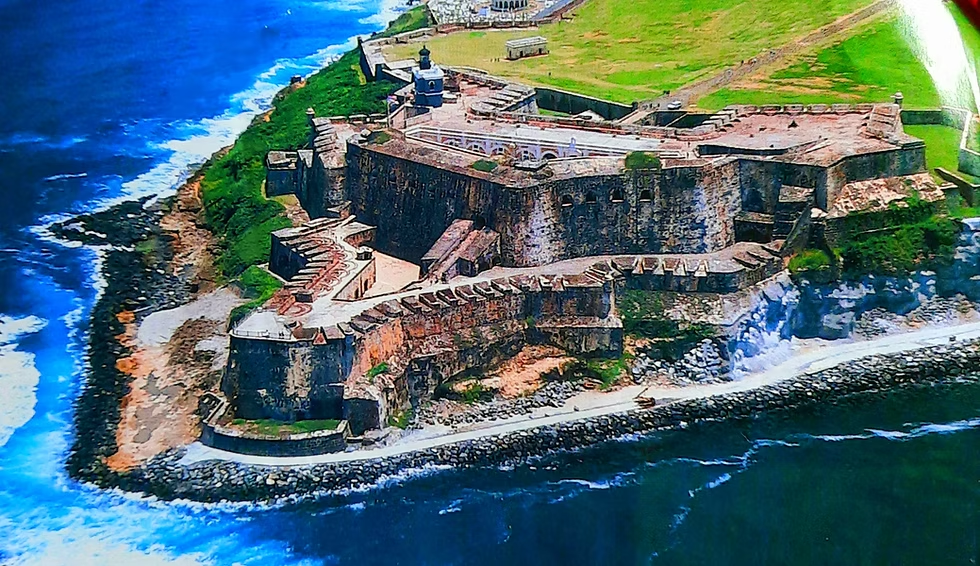
Castillo San Felipe del Morro — El Morro — is the 16th-century Spanish fortress at the tip of Old San Juan that took 250 years to build and successfully repelled the Dutch and the English. The walls are 140 feet above the water. The sunset from the ramparts on a clear evening is one of the better views anywhere. Go late afternoon, not midday. Admission is $10, National Park Service site. The kite flyers on the lawn approaching the entrance are there every afternoon and make the walk in genuinely beautiful. Bring cash for the vendors selling cold coconut water at the gate.

La Placita de Santurce is a farmers’ market by day and a full outdoor party by night. Bars ring the square, live music spills into the street, salsa dancing happens whether you intended to participate or not. The locals outnumber the tourists here in a way they don’t anywhere in Old San Juan. Go on a Thursday at 9 p.m. — not 7 when it’s still warming up. Stay past midnight. Eat the empanadillas from the street vendors while you’re standing there. This is the experience that makes people book a return trip before they’ve left. The Santurce neighborhood surrounding it has one of the most concentrated collections of large-scale street murals in the Caribbean — Calle Cerra and the blocks around it are walkable and the work is significant. And Calle Loíza, connecting Ocean Park to Condado, is the best daytime walk in the city — boutiques, coffee shops, galleries, small restaurants, and a local population that is actually using the street.
El Yunque National Forest, 45 minutes east of San Juan, is the only tropical rainforest in the US National Forest system. Reserve a time entry slot in advance at recreation.gov — slots release the day before and often become available around midnight if you check. Go early before the afternoon clouds and rain arrive. A guided tour through a local company runs $45–65 and is worth it. The forest has more than 240 plant species, 16 of which exist nowhere else on earth. The La Mina Trail to the waterfall is the standard route and earns its reputation.


The bioluminescent bay at Laguna Grande in Fajardo, an hour east, contains hundreds of thousands of dinoflagellates per gallon of water — microorganisms that emit blue light when disturbed. Kayaking through the bay at night produces a glow around every paddle stroke and around your hands if you dip them in. Book with a small local company for a more attentive tour. Skip the full moon nights — the moonlight reduces the effect significantly and the experience is best on a dark night.
Casa Bacardí in Cataño sits across the bay from Old San Juan and is reached by ferry from Pier 2 for $0.50 each way — the best transportation value in Puerto Rico. The tour covers the family’s history, the production process, and ends with tasting. The rum here is the original product and it tastes different from the shelf version. Plan two hours.
One practical note: Old San Juan, Condado, Ocean Park, and Santurce are all reachable by Uber for $5–10 per trip. The free trolley runs through Old San Juan during the day. Do not rent a car if staying in the metro area — parking is expensive, traffic is real, and everything worth doing is reachable without one. Save it for a day trip to El Yunque or the bioluminescent bay.
The coqui — the tiny tree frog native to Puerto Rico — sings every night throughout the island. The sound is constant and specific and unlike anything you’ve heard anywhere else. It will be the first thing you notice when you step outside after dark in any quiet neighborhood, and it will be the thing you miss most when you get home.


