

For 95 years, a good many Dallas family meals started with picking up a tray. You slid it along the rail, read your way past a wall of American presidents, and tried to make up your mind before you reached the squash casserole. Highland Park Cafeteria fed this city from 1925 until the spring of 2020, and anyone who ate there can still tell you what they ordered.
Plenty of Dallas diners never stood in one of those lines, so a word about what this place was. Say cafeteria today and most people picture a school lunchroom. The old Southern cafeteria ran on its own rules. You picked up a tray and worked your way down a long counter of salads, entrées, vegetables, breads, and desserts, pointing at what you wanted while the staff behind the glass filled your plates. Everything came from scratch out of the kitchen behind the line, and you paid at the far end. At Highland Park Cafeteria, a staffer would help carry your tray to the table.

The format has been slipping away the same way the automat did. Horn & Hardart opened the country’s first successful automat in Philadelphia in 1902, where customers dropped coins in a slot, turned a knob, and pulled a sandwich or a slice of pie from behind a small glass door. The last one closed in Manhattan in April 1991, and most Americans under 50 never set foot in one. The scratch-kitchen cafeteria is headed down that same road, and Highland Park Cafeteria was one of the last great ones Dallas had.
The cafeteria opened in 1925 on Knox Street, across from Highland Park Pharmacy. The Dallas Morning News credits Sallie Temple Goodman as the founder, and the Goodman and Yates families owned the business for roughly seven decades. Her son Dewey Goodman and his wife, Carolyn Goodman, ran it. Carolyn was co-owner and operator from the start and stayed with it until her death in 1995. Regulars knew her as Mrs. Carolyn or Mama Goodie.
Old matchbooks carried a line that summed up the clientele: serving particular people since 1925. Highland Park families came in after church, garden clubs booked it for luncheons, and brides held their bridal lunches there.
Carolyn Goodman took the restaurant trade seriously. In 1952 she became the first president of the Women’s Auxiliary of the Dallas Restaurant Association, and twenty years later the Texas Restaurant Association gave her its Distinguished Service award. Accepting it, she said, “Our work is really play,” and described the cafeteria as a party that never ended because friends kept walking through the door.


The place looked after its people. In August 1953, a pie server named Velma Nevill read in the Morning News that her son, a Marine reported missing in Korea and feared dead, had been released. Customers brought her cakes and started a travel fund, salesmen at Ben Griffin Auto Company passed the hat for a round-trip ticket to San Francisco, and the cafeteria gave her a second paid vacation so she could be there for his homecoming.
In 1956, the cafeteria hired a young man named Ernest Bowens. Dallas came to know him as Mr. B, and his cafeteria career stretched past 60 years, long enough to cook for several owners in two parts of town. He knew the recipes by heart long before anyone put them in the binders at each kitchen station, and once they were written down, his sweet potato pie carried his initials.
Mr. B also carried memories this city should hear. He told Morning News columnist Sharon Grigsby about the years when Black diners were not allowed to eat at Highland Park Cafeteria, and about watching his employer turn away a football team because some of its players were Black. He also watched that barrier fall after Dallas Cowboys including Mel Renfro and Don Perkins began eating there.
In July 1981, The New York Times sent reporter Peter Applebome to Knox Street. His story gave the cafeteria the nickname it wore for the rest of its life, America’s Cafeteria, a play on the Cowboys and their America’s Team label. Applebome described some of the wealthiest people in Dallas parking their Cadillacs and Lincoln Continentals outside the two-story building and waiting in line with everybody else.
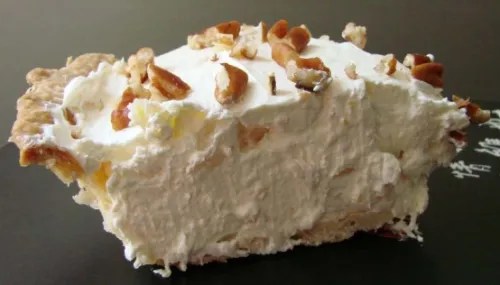
He also wrote down what was on the line that year: a hot jalapeño macaroni, the zucchini muffins, an eggplant dish that tasted like baked oysters, and millionaire pie, the icebox pie built on whipped cream, pineapple, and nuts.
Earlier regulars had their own favorites. One longtime customer, who first ate there as a boy around 1960 after church with his grandparents, remembered a Caesar salad with a thick, cheesy dressing, baked fish with extra tartar sauce, and a rich icebox pie, most often chocolate. He also remembered the line winding past glass cases filled with Carolyn Goodman’s china collection.

At its peak, the company ran eight cafeterias around Dallas, including one in Casa Linda Plaza at Garland Road and Buckner Boulevard, near White Rock Lake. The oil bust and the bank failures of the late 1980s cut the chain down to two, the Knox Street flagship and Casa Linda.
After Carolyn Goodman died in 1995, the family stepped away and the business was sold. The new ownership could not keep it going, and the Knox Street cafeteria closed.
That closing did not go quietly. The old building was set to give way to a parking lot, and the people who loved the place were not willing to let it happen without a fight. Protesters calling themselves the Knox Street Lovers gathered outside the cafeteria, objecting to the loss of a fixture that had been feeding the neighborhood since 1925. Knox was turning trendier by the late 1990s, and to many regulars, paving over the cafeteria said plenty about where the street was headed. The protests did not save the building.


The Casa Linda branch carried on as Casa Linda Cafeteria, with many of the same cooks and dishes, until it shut down abruptly in December 2006. Some regulars found out when they showed up for lunch to locked doors.
Jeff Snoyer was one of those regulars. He worked in real estate, had never set foot in a restaurant kitchen, and had been eating at the cafeteria with his wife for years. He bought the business and in 2007 reopened it at 1200 N. Buckner Blvd. under its original name, which is how a restaurant called Highland Park Cafeteria spent its final 13 years in East Dallas.
Snoyer brought back as many veterans as he could, Mr. B among them. The presidents went back up along the walk to the steam table, with the first ladies around the corner. A pianist played in the dining room, and the staff gathered each morning to pray before service, in English or Spanish.
Thanksgiving was the busiest stretch of the year. Snoyer once said the restaurant served about 9,000 people over three days that week, with pies stacked high on the counters and the line wrapped around the building. Families waited more than an hour, and staff walked the line handing out zucchini muffins and water.

In 2011, the Chefs for Farmers event moved into the Casa Linda dining room, and 15 chefs took their own spins on old-school cafeteria dishes and served them right off the line. Note that our own Steven Doyle was the emcee that year. Participating chefs that year included Janice Provost and Chad Houser (Parigi), John Tesar, Matt McCallister, Dan Landsberg (Dragonfly at Hotel ZaZa), Tim Byres (Smoke), Randall Copeland and Nathan Tate (Ava), Scott Romano (Charlie Palmer) Brian Luscher (The Grape), J. Chastain (The Second Floor), Justin Fourton and Diane Fourton (Pecan Lodge), Rick Griggs (former pastry chef of Abacus)
In 2017, when CraveDFW went hunting for a childhood favorite, millionaire pie, a round of phone calls turned up only one Dallas-area cafeteria still making it, and it was Highland Park Cafeteria.
The menu changed every day, but a core stayed put. A daily menu from the early Snoyer years listed smothered steak, chicken fried steak, baked salmon, and baked chicken. By 2019 the house classics also included Angus beef brisket, chicken fried chicken, fried catfish, fish croquettes, grilled chopped steak, and beef liver and onions. The corned beef had its own following, and pot roast turned up too.
Vegetables were cooked from fresh produce, and the lineup read like a Sunday dinner in East Texas: baked squash, turnip greens, collard greens, fried okra, pinto beans, mashed potatoes, and macaroni and cheese.
The squash casserole is the dish people still ask about. By most accounts it was a simple thing, yellow squash and onion cooked down with butter, bound with crushed saltines, and baked until the top browned. The Morning News once ran a version it believed came close, and Texas cookbook author Lisa Fain later worked out measurements for it on Homesick Texan. The cafeteria never gave up its own recipe.
The cold case held carrot and raisin salad, spinach salad, coleslaw, congealed salads, and ambrosia with coconut, marshmallows, and maraschino cherries. Tomato aspic was there too, sometimes with slices of avocado folded in.
The breads were their own reason to visit. The zucchini muffins were the signature, sharing space with marathon muffins, jalapeño cornbread, and yeast rolls in wheat or white. Vegetable beef soup and tortilla soup rounded out the line.
Then came dessert, where most trays got heavy. Cakes included devil’s food, German chocolate, carrot cake, coconut cake, and angel food. Pies ran from pecan and cherry to lemon meringue, coconut meringue, rhubarb, Mr. B’s sweet potato pie, and that millionaire pie. Peach cobbler, egg custard, and rice pudding covered the traditionalists. Snoyer once said he could spend all day talking about the pies.

The end came fast. Highland Park Cafeteria closed its dining room on March 16, 2020, as the pandemic shut down Dallas restaurants. Snoyer had recently bought new equipment and hired a new chef, but he decided against switching to takeout. His crew cooked everything in the kitchen, set up a makeshift drive-through, and handed out close to 1,000 free meals.
On May 11, 2020, Snoyer announced the cafeteria would not reopen. Leftover food went to local charities. An online auction sold off the presidential portraits, the holiday decorations, and the kitchen equipment, with proceeds benefiting the staff, and the piano was donated. Mr. B, who was 89, retired. A year earlier he had told the Morning News the cooks put “come-back” in the food, as in come back for some more.
Snoyer said he was keeping the recipes, all 932 of them, and left the door open a crack on the zucchini muffins someday making a return. So far that has not happened. Rodeo Goat opened in the old Casa Linda space in July 2022.
A lot of Dallas kids learned the order of the presidents in that line, stalling between the chicken fried steak and the fried catfish while their grandparents stopped to visit with half the neighborhood. Those kids are grandparents now, and plenty of them would still drive across town for a plate of that squash casserole.
Just for history’s sake, let’s look at where the original building (3212 Knox) stood. It is now Pottery Barn.


