
New York’s food writers have been saying it for a year: Lisbon is the next great dining city to influence American restaurants. Not a prediction — a present-tense statement. The pintxos bars and conservas counters and wine-forward tascas that built Lisbon’s reputation are showing up in Manhattan, in Brooklyn, in the neighborhoods where food-obsessed people pay attention to what’s coming next. The question for Dallas isn’t whether Portuguese food is having a moment. It’s why nobody here has moved on it yet.


The answer is probably that most Americans still can’t quite locate Portuguese cuisine in their mental map. It gets lumped in with Spanish food, confused with Brazilian, occasionally reduced to piri piri chicken. None of that is accurate, and the confusion undersells what the cuisine actually is. Portuguese cooking is one of the oldest and most widely traveled food traditions in the world — five centuries of maritime exploration left it with ingredients and techniques absorbed from West Africa, Brazil, India, and Southeast Asia, all folded back into a cuisine that still tastes unmistakably like itself. That combination of deep tradition and global range is exactly what serious restaurant cities are drawn to right now.
The building blocks are not exotic. Bacalhau — salt cod — is the foundation of dozens of traditional preparations, from Bacalhau à Brás, scrambled with eggs, onion, and crispy potato straw, to the richer Bacalhau com Natas, baked under a cream sauce. Both are comfort food in the truest sense, and both would find an immediate audience in Dallas. Caldo verde, the national soup — kale, potato, linguiça, olive oil — is the kind of bowl that belongs in a Dallas winter. Bifanas are pork shoulder sandwiches marinated in wine and garlic, pressed and served with sharp mustard. They are the Portuguese answer to the Italian beef, and they are exceptional.

The seafood profile is where things get genuinely interesting for a city that’s been hungry for a serious fish restaurant that isn’t built around a steakhouse model. Amêijoas à bulhão pato — clams steamed with olive oil, garlic, white wine, and cilantro — is one of the great simple preparations in European cooking. Grilled whole fish, sardines over live coals, octopus braised low and slow before hitting a plancha: the Portuguese approach to seafood is technique-driven and unadorned in a way that lets the ingredient lead. Dallas has enough people who’ve eaten well in coastal cities to know the difference.
Then there’s the conservas culture — tinned fish elevated to an art form. Portugal produces some of the finest canned seafood in the world: sardines packed in olive oil, octopus in its own ink, mackerel with lemon and herbs, cockles and mussels and razor clams. In Lisbon, conservas shops function like wine shops, with labels curated by region and producer. In New York, conservas counters are now a legitimate restaurant format — a glass of wine, a tin of fish, good bread, done. Dallas has the wine bars. It has the bread programs. Nobody has put this together yet.
The wine case makes the opening argument even stronger. Vinho Verde — literally “green wine,” light and slightly effervescent, low alcohol, razor-bright acidity — is exactly what the Dallas summer calls for. Alentejo reds, made from Aragonez and Trincadeira grapes in one of Portugal’s warmest regions, are structured and food-friendly in a way that sits comfortably alongside the Spanish and Italian bottles already moving well at local wine bars. The wines are largely unknown to casual drinkers here, which means a Portuguese restaurant would arrive with a built-in point of difference rather than competing on the same wine list everyone else is already running.

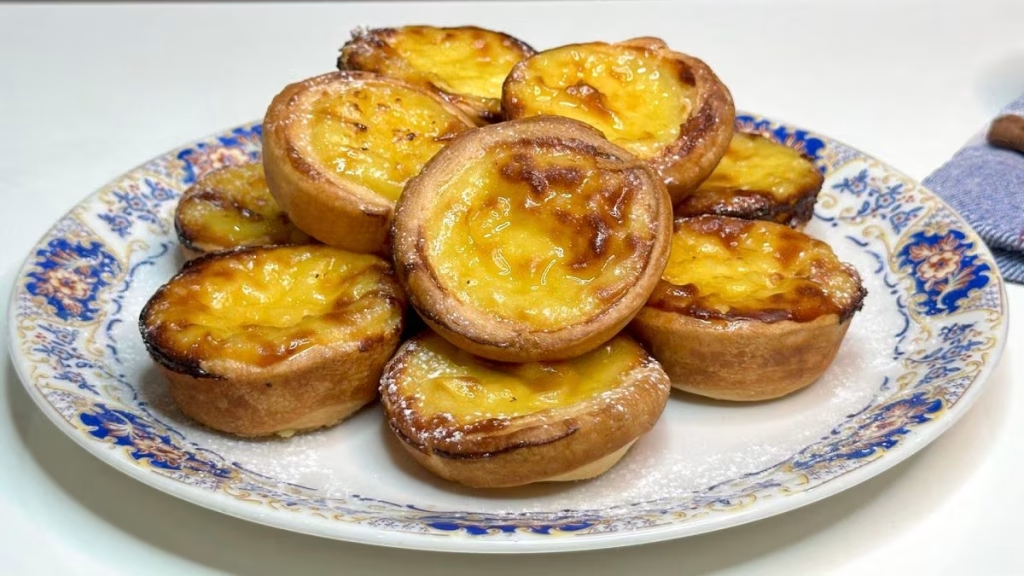
Pastéis de nata close the argument. The custard tarts from Lisbon’s Pastéis de Belém bakery — flaky pastry shells filled with a barely set egg custard, dusted with cinnamon and powdered sugar, eaten warm from the oven — are one of the most universally beloved pastries in the world. They travel. Every city that gets a serious Portuguese bakery sells out of them before noon.
Dallas has the appetite for all of this. The Design District has proven the market for serious European concepts. Lower Greenville is absorbing Mediterranean influences at a rate that would have seemed unlikely two years ago. Knox-Henderson is about to get Sant Ambroeus. The infrastructure for a serious, thoughtful Portuguese restaurant — or even a conservas wine bar — is already here. The chef who figures that out first will have the whole city to themselves.
In the meantime, the closest things in town are doing adjacent work worth knowing. Alara in the Design District is bringing a Turkish Mediterranean lens to the kind of shareable, wine-forward format that overlaps with the Portuguese tavern tradition. Patina Green in McKinney has been running the farm-driven, daily-changing small menu that is structurally not far from what a good tasca does. The appetite for restraint, for quality ingredients handled simply, for wine that tastes like somewhere — that appetite is real in Dallas. Someone just needs to point it toward Lisbon.


